Website, SEO & Automation
See the system behind the site
Classic Landscapes is one example of website, SEO, and automation together: the front end, the portfolio, the lead system, and the search architecture underneath.

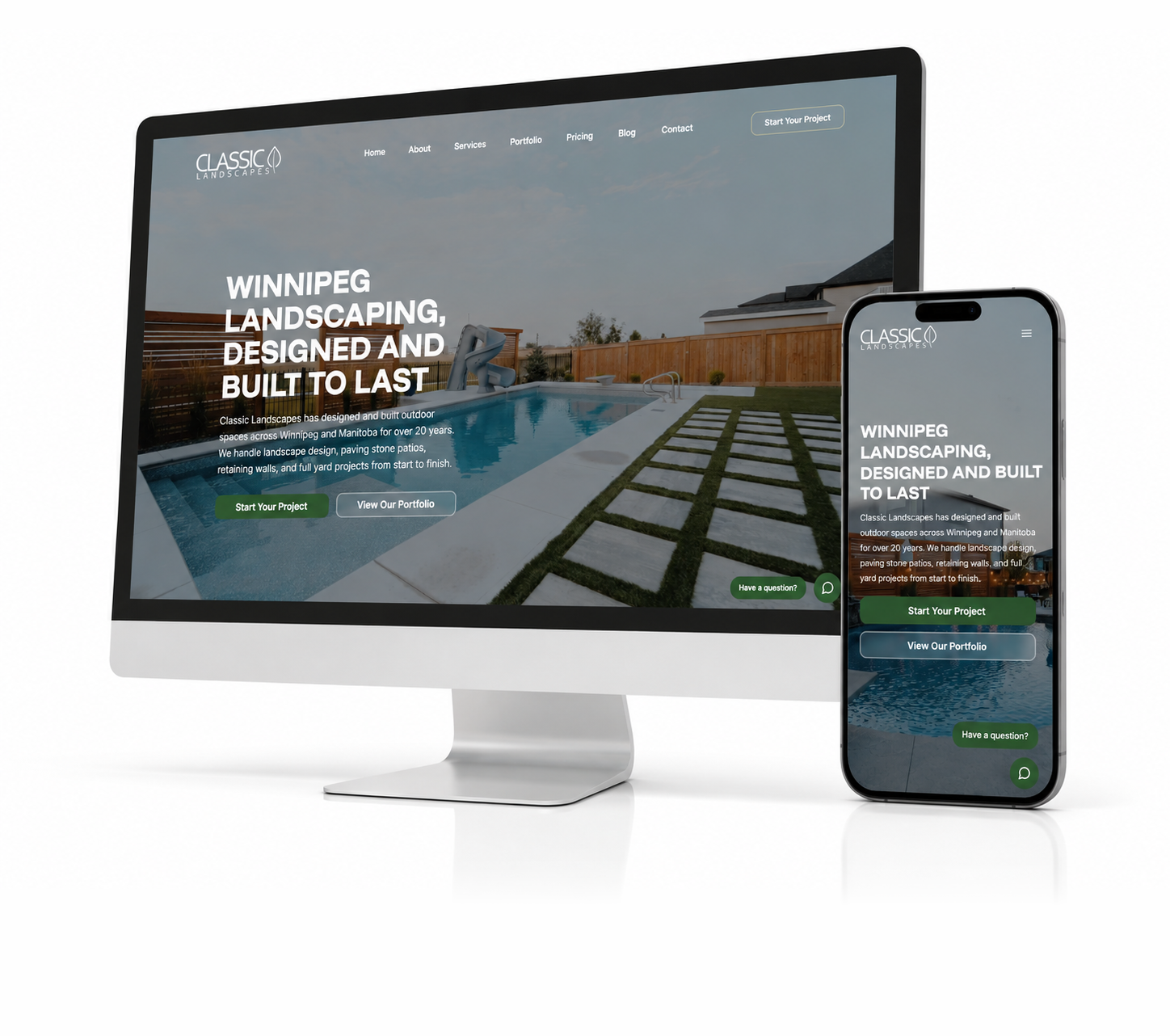
Conversion-focused front end
The homepage has one job: get the right people to reach out
Visitors decide in seconds whether a contractor looks credible. The first screen carries a clear offer, a visible next step, and enough proof that requesting a quote feels like the obvious move.
The nav is part of that. Portfolio, services, and Start Your Project stay in reach, not hidden behind a generic menu.
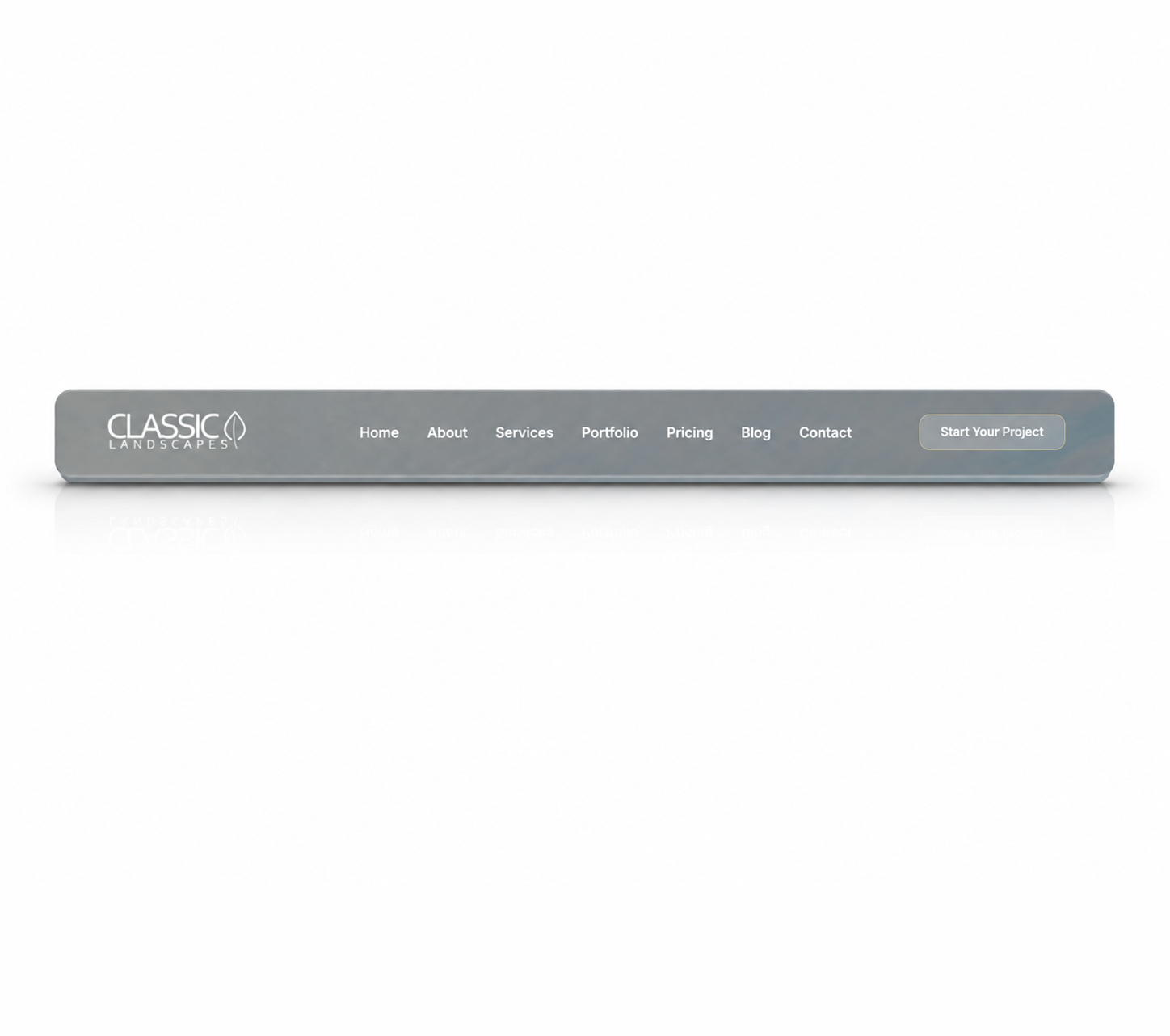
Lead-generation system
A contact form is not a lead system
The form is built to collect usable information, keep junk out, and get the inquiry to the business. Name, email, phone, and project details come in structured, not as a blank message.
On Classic Landscapes, form-to-call follow-up is hands-free. Intake happens on the site so the team can stay on the job.
- Spam filtering. Bots and junk submissions are stopped before they hit the inbox.
- Email verification. The address has to be real so the team can actually follow up.
- Privacy policy. Consent sits on the form. People know how their information will be used before they submit.
- Required fields. Incomplete quotes do not go through. The team gets a name, a way to reach them, and enough project detail to start.
- Direct delivery. The inquiry reaches the business in a usable format, ready for a call, not a pile of unstructured emails.
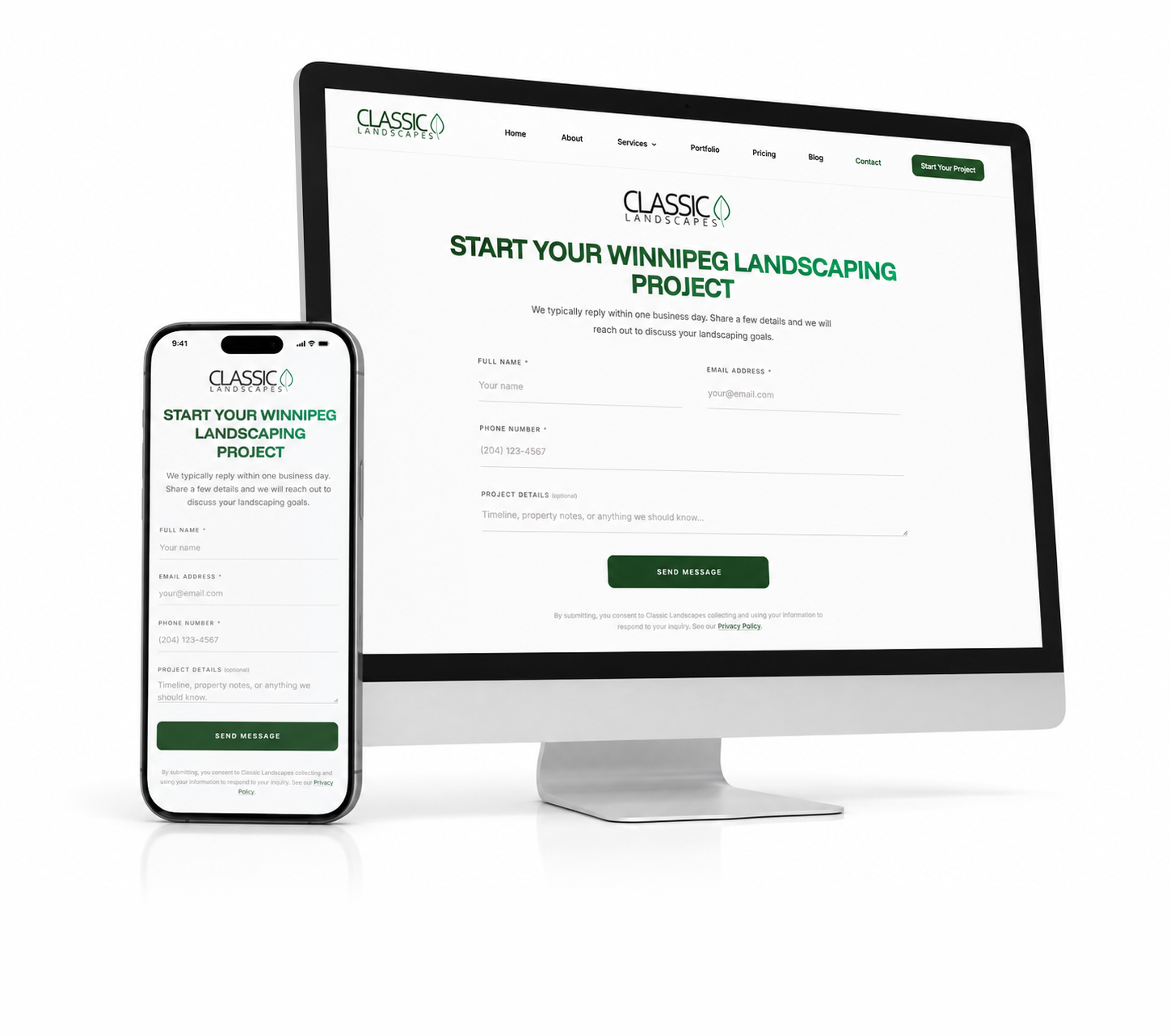
Design → Reality
Let them see the job before it exists
The 3D-to-finished slider is a sales tool. Homeowners can compare the rendering to the completed yard, so the leap from “nice website” to “they can do my property” gets shorter.
That kind of interaction belongs in the build. Not as a gimmick. As proof.
Service architecture
One page cannot sell every service well
A services grid makes the full offer scannable. Dedicated pages then give each trade the room it needs, and give search and ads a real landing page to send people to.
Customers show up already educated. The conversation starts further along.
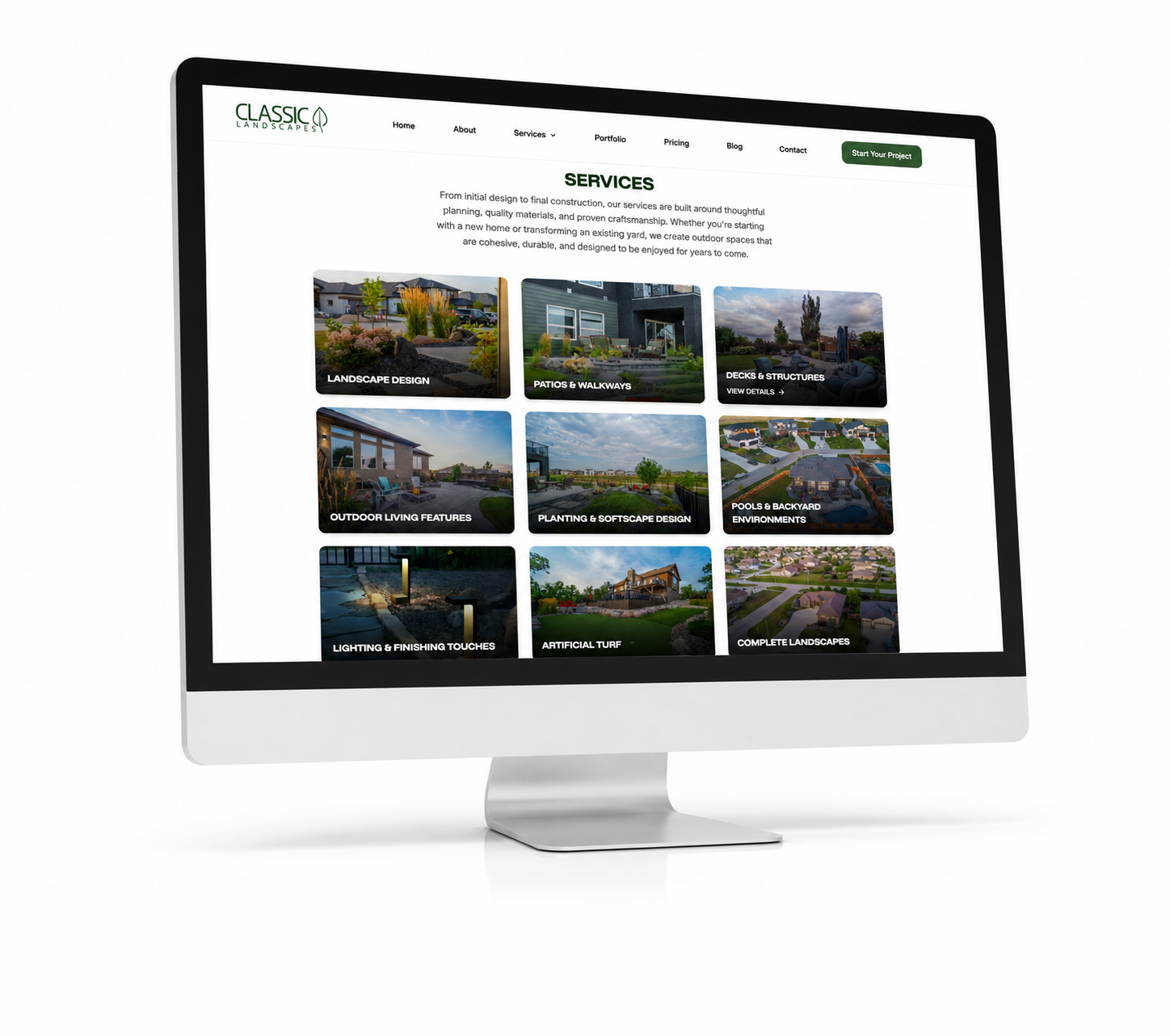
Dedicated service page
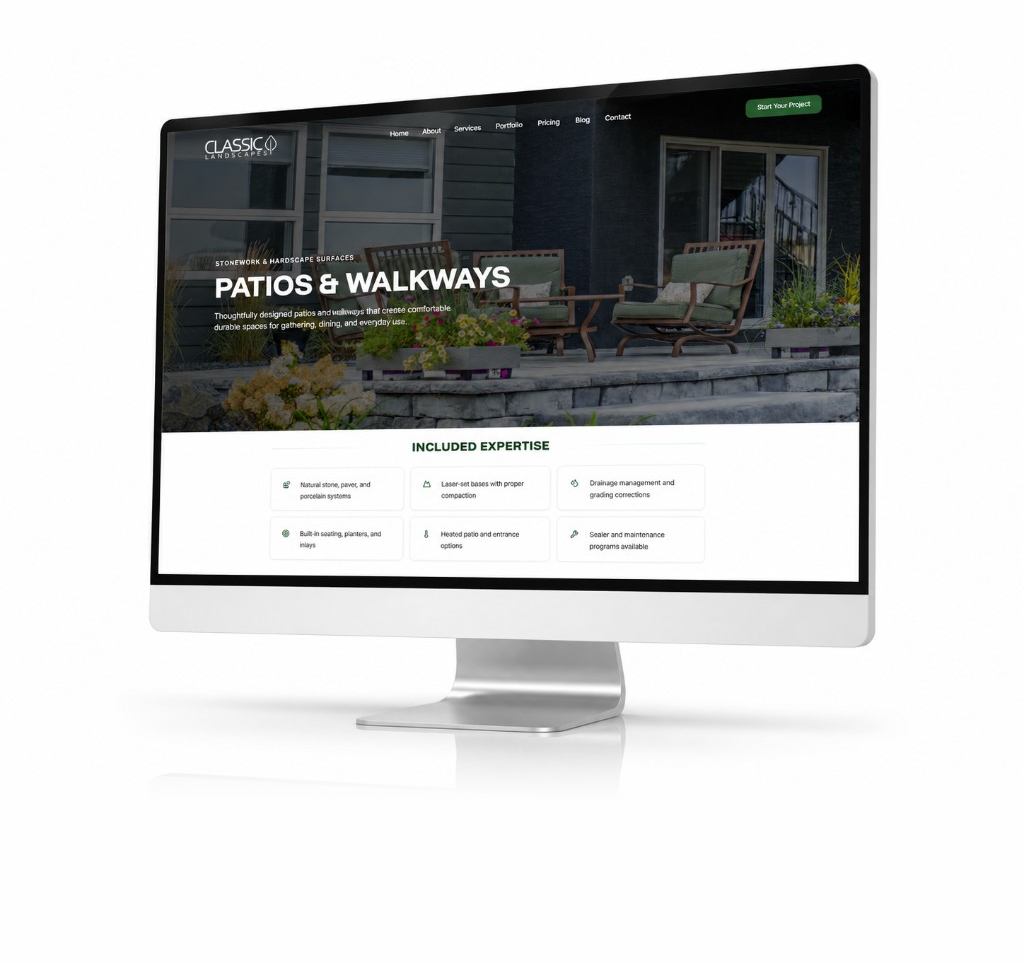
Enough detail that a landing page can actually close
Patios & Walkways is one example: a real service page with included expertise, supporting imagery, and a path to start the project, not a paragraph on a one-pager.
Pages like this are what people land on from search and ads. They have to do more than look finished.
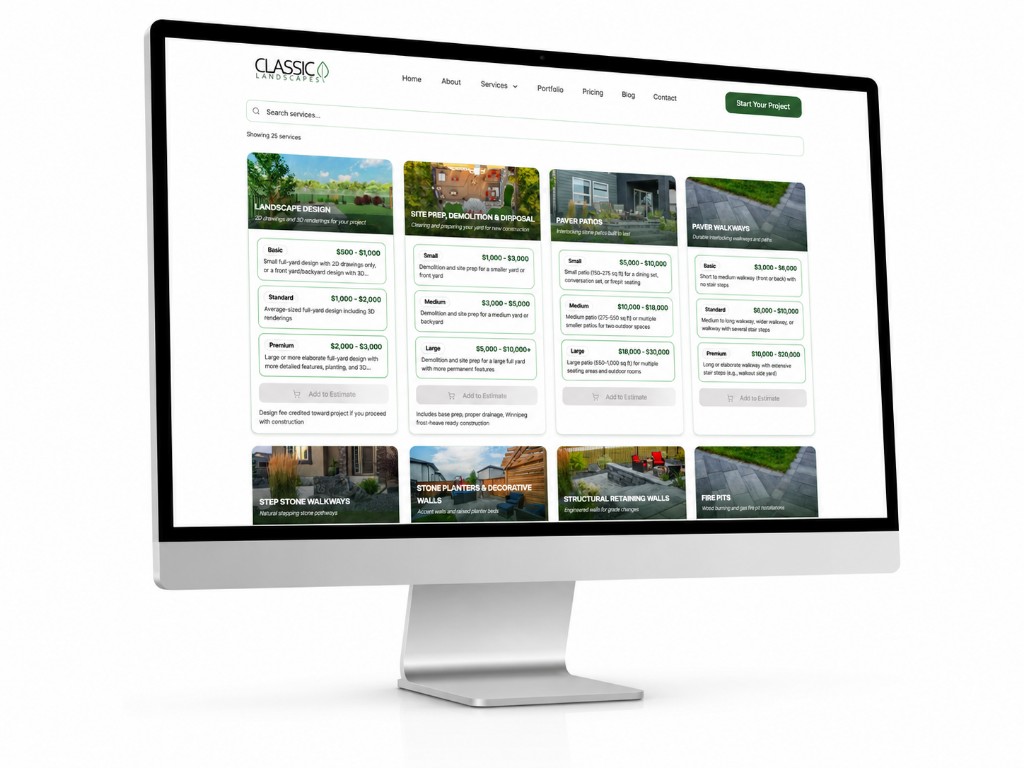
Pricing & planning
Give customers answers before they have to ask
The site does more than list services. Homeowners can search the work, see realistic project ranges, and build an estimate before they reach out, so the first conversation starts with scope, not “how much does a patio cost?”
Serious prospects self-qualify. The team spends less time repeating the same numbers, expectations are set before a sales call, and the buying process is clearer for both sides.
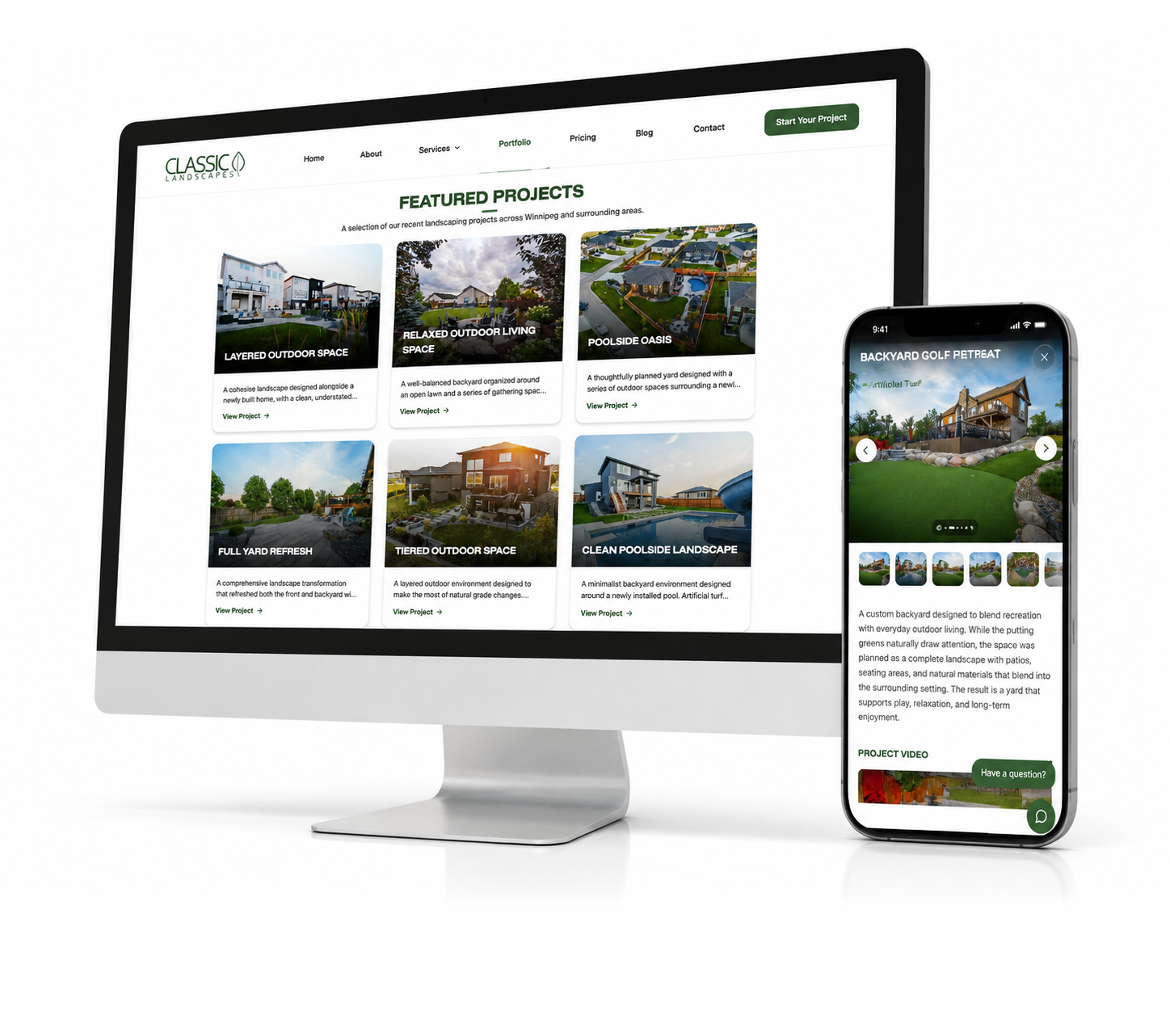
Project showcase
The work has to do the selling
For a landscaping company, the site is only as strong as the proof. Kevin’s portfolio is a proper project showcase, not a dumped photo folder, so homeowners can see the quality of the work before they pick up the phone.
Finished yards sit one click off the nav. That is what turns a visitor into someone who believes the company can do their property.
Search architecture
Built into the site. Not added afterward.
Search engines have to understand what the company does, where it works, and which page is meant to rank for which job. That is decided when the site is built, not in a keyword pass after launch.
Service pages, titles, headings, URLs, and internal links are planned with the architecture. Structured data adds context. Local relevance comes from naming the work and the city in the places that actually get crawled.
Site structure
classiclandscape.ca
- Home
- Services → Patios & Walkways
- Portfolio
- Pricing
- Contact
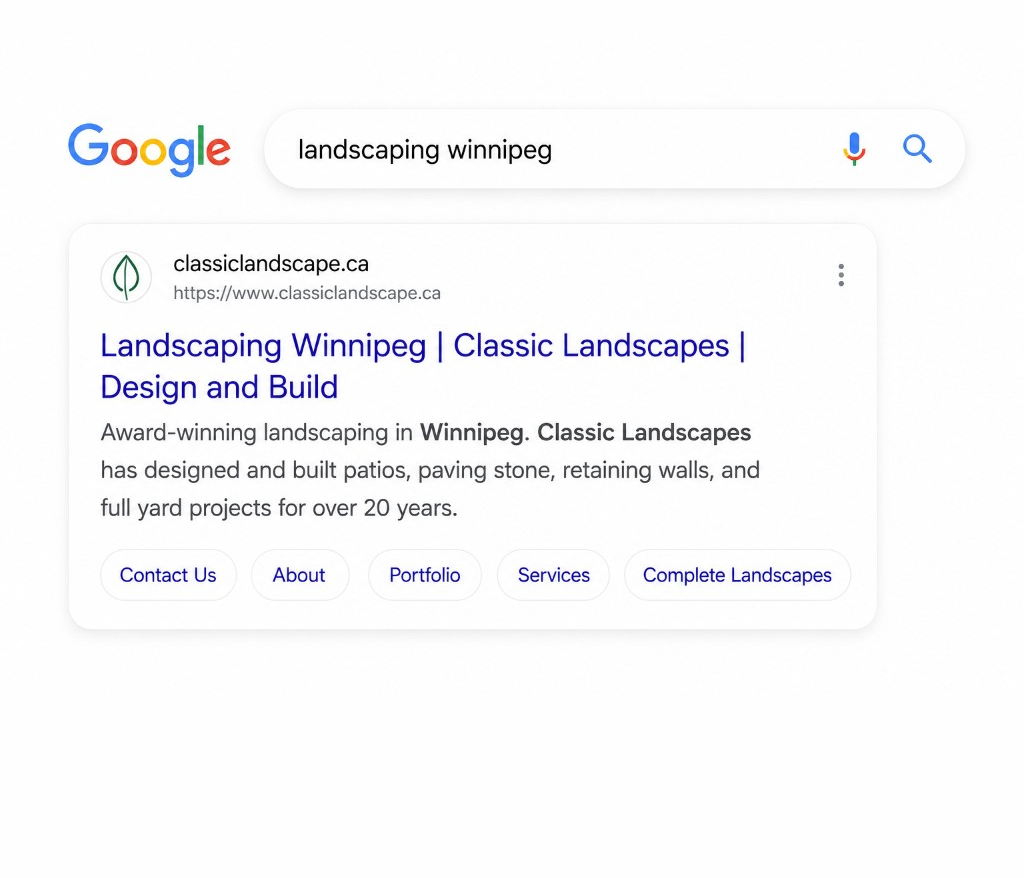
Title + meta
The blue line and the snippet are written on the page. That is what a homeowner sees before they click.
Location targeting
“Landscaping Winnipeg” is in the query, the title, and the description.
Sitelinks
Contact, Portfolio, Services. Google only shows those when the pages exist.
The page behind the listing
Service pages
Each trade has a page that can rank and take traffic, not a buried paragraph.
Titles, headings, URLs
Planned with the build so crawlers and homeowners read the same offer.
Internal linking
Related work points to related work, so the site reads as one business.
Technical foundations
Clean URLs, crawlable architecture, and schema underneath the listing.
Mobile experience
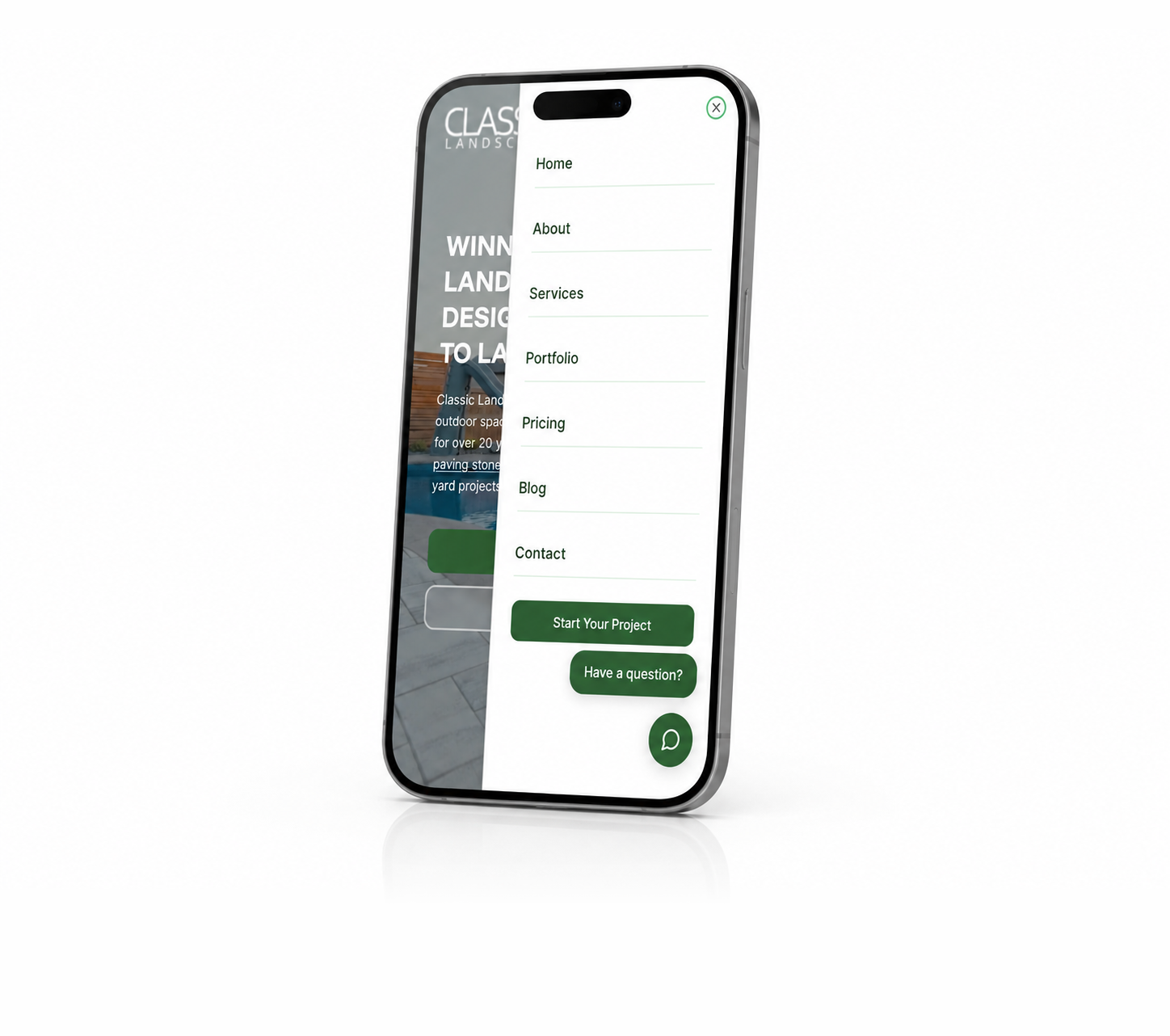
Most quotes start on a phone
We do not shrink the desktop layout. Navigation, type, buttons, the portfolio, and forms are rebuilt for a thumb-width screen so the path to the work, and to contact, stays obvious.
Nobody should pinch-zoom a contractor site to find Start Your Project.
Built to last
Fast enough to keep the visitor. Clean enough to keep changing.
The visible design is only part of the build. Performance, accessibility, and a maintainable frontend are what keep the site useful after launch.
Speed that holds a visitor
A slow page loses the quote before the offer is even read, especially on a phone at a job site.
Layouts that hold their shape
The same site has to work on a phone, a tablet, and a desktop without becoming a squeezed copy of itself.
Usable by more people
Clear type, readable contrast, and controls that work with a keyboard mean more visitors can actually reach out.
A site you can keep changing
Clean frontend code and a reliable deploy path mean updates do not require starting over every year.
“Working with this team completely transformed our online presence. The new site finally matches the quality of our work, our follow-up is fully automated, and we're seeing more qualified leads come in every week. It's taken a huge load off my plate so I can focus on running the business.”
Kevin Versteeg, Classic Landscapes
Want a site built this way?
Classic Landscapes is the example. The same structure is what we bring to contractor websites in general.